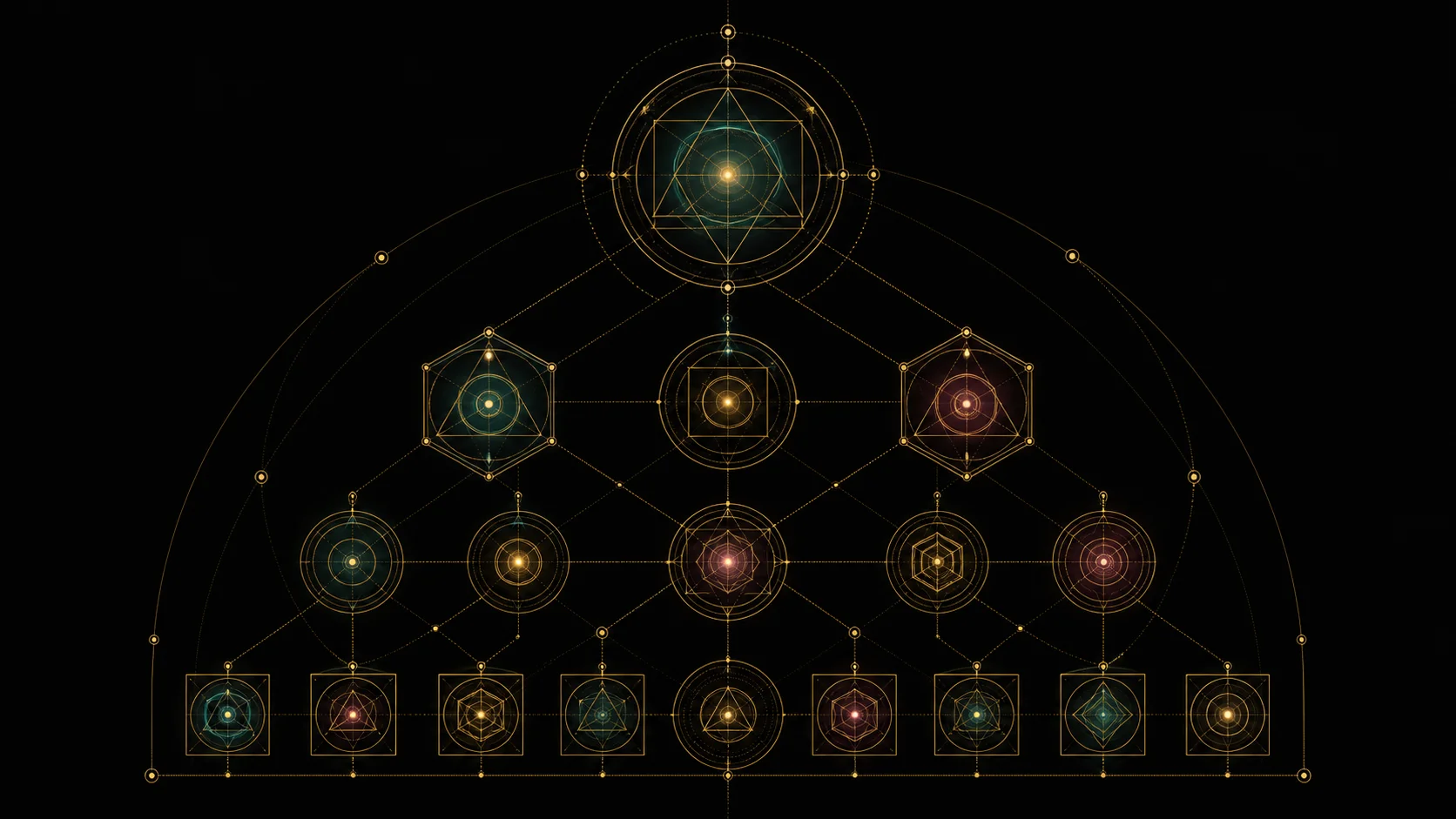
The AI-native stack is not traditional software with AI bolted on. It is a different architecture where agents are first-class citizens, context is the primary data structure, and tools are the API layer. Here is what changes, and why most teams get it wrong.
The Traditional Stack
Traditional software architecture is request-response. A user sends a request. The server processes it. The database returns data. The server formats it. The user sees a result.
User -> API Server -> Database -> API Server -> User
The API server is the application logic. The database is the data store. The user is the trigger. This stack assumes: the user knows what they want, the request is specific, the response is deterministic, and the computation is stateless.
AI breaks all four assumptions.
What AI Changes
1. The user does not know what they want. The user's request is often vague ("summarize my inbox," "find that thing about the project"). The system must interpret intent, not just execute a query.
2. The request is not specific. The request is a natural-language string, not a structured API call. The system must parse, disambiguate, and plan before executing.
3. The response is not deterministic. The same input can produce different outputs. The system must handle non-determinism gracefully, with retries, fallbacks, and quality checks.
4. The computation is not stateless. The agent needs context: conversation history, user preferences, previous tool calls, external state. The system must manage context as a first-class concern.
These four changes require a different stack. Not a different tool, a different architecture.
The AI-Native Stack
User -> Agent Orchestrator -> [Context Store + Tool Mesh + LLM] -> Agent Orchestrator -> User
Layer 1: Context Store
The context store is the primary data structure. It is not a database in the traditional sense. It is a system that can:
- Store unstructured context (conversation history, documents, tool outputs).
- Retrieve relevant context by semantic similarity, not by primary key.
- Manage context windows (what to include, what to evict, what to summarize).
- Persist across sessions (the agent remembers what happened last time).
The context store is usually a vector database (Pinecone, Weaviate, pgvector) plus a structured store (PostgreSQL) for metadata. The vector store handles semantic retrieval. The structured store handles relationships, permissions, and versioning.
Layer 2: Tool Mesh
The tool mesh is the API layer. In traditional software, APIs are endpoints. In AI-native software, APIs are tools. The difference:
- Endpoints are called by code. The developer writes
fetch('/api/users'). The call is deterministic, typed, and synchronous. - Tools are called by agents. The agent decides which tool to call, with what arguments, in what order. The call is non-deterministic, natural-language-described, and may be parallel.
The tool mesh is usually MCP (Model Context Protocol) servers. Each tool has a name, a description, a schema, and a handler. The agent sees the tool list and decides which to use. The tool mesh is the agent's hands.
Layer 3: Agent Orchestrator
The agent orchestrator is the application logic. It is not a server in the traditional sense. It is a system that:
- Receives the user's request.
- Plans a sequence of tool calls to fulfill it.
- Executes the plan, handling errors, retries, and non-determinism.
- Manages the context window across the conversation.
- Returns a result to the user.
The orchestrator is usually built on an agent framework (LangChain, LangGraph, CrewAI, custom). The framework provides the planning loop, tool-calling interface, and context management. The application logic is the orchestration strategy: which agent, which tools, which context, in what order.
Layer 4: LLM
The LLM is the reasoning engine. It is not the application. It is a component that the orchestrator calls to:
- Interpret the user's intent.
- Decide which tool to call next.
- Synthesize tool outputs into a response.
- Generate natural-language text.
The LLM is stateless. The orchestrator manages state. The LLM is non-deterministic. The orchestrator handles retries. The LLM is expensive. The orchestrator caches.
Why Most Teams Get It Wrong
Mistake 1: Treating the LLM as the application. The LLM is a component, not the application. Teams that build "an LLM with a prompt" have no orchestrator, no context store, no tool mesh. They have a chatbot. Chatbots are not AI-native software. They are traditional software with an LLM endpoint.
Mistake 2: Treating context as an afterthought. Context is the primary data structure. Teams that store context in a single JSON blob, or in the LLM's conversation history, have no context management. They cannot persist, cannot retrieve semantically, cannot manage windows. The agent forgets everything between sessions.
Mistake 3: Treating tools as endpoints. Tools are not endpoints. Tools are described in natural language, called by agents, and may fail non-deterministically. Teams that build tools with the same assumptions as REST endpoints (typed inputs, deterministic outputs, synchronous calls) produce tools that agents cannot use effectively.
Mistake 4: Treating the orchestrator as glue code. The orchestrator is the application logic. Teams that build a thin wrapper around an LLM call ("send prompt, get response, return to user") have no orchestration. They cannot plan, cannot retry, cannot handle multi-step tasks. The agent is only as good as the orchestration.
What This Changes
For engineering teams: the question shifts from "how do we add AI to our product" to "how do we build on the AI-native stack." The first question leads to bolt-on features. The second leads to architectural redesign.
For the field: the question shifts from "what LLM should we use" to "what orchestrator, context store, and tool mesh should we use." The first question is about the reasoning engine. The second is about the architecture. The reasoning engine is a commodity. The architecture is the differentiator.
The AI-native stack is not the future. It is the present for teams that have shipped production agents. It is the future for everyone else. The transition is not a tool change. It is an architecture change. And architecture changes are hard, slow, and worth it.
For production MCP infrastructure (the tool mesh layer), see Standard MCP Deployment. For a technical audit of your AI-native stack, see the MCP Audit service.
Enjoying this?
Get weekly insights on consciousness, systems, and sovereignty.
Share
Comments
Sign in to join the conversation.