The reason you cannot sustain a habit is not a discipline problem. It is a conditions problem. Effort works against attractor states; conditions redesign them.
This is not a framing trick. It is a structural claim about how behavioral patterns work, and it changes the question from "how do I try harder" to "how do I redesign the conditions so trying harder is not the answer."
What an Attractor State Is
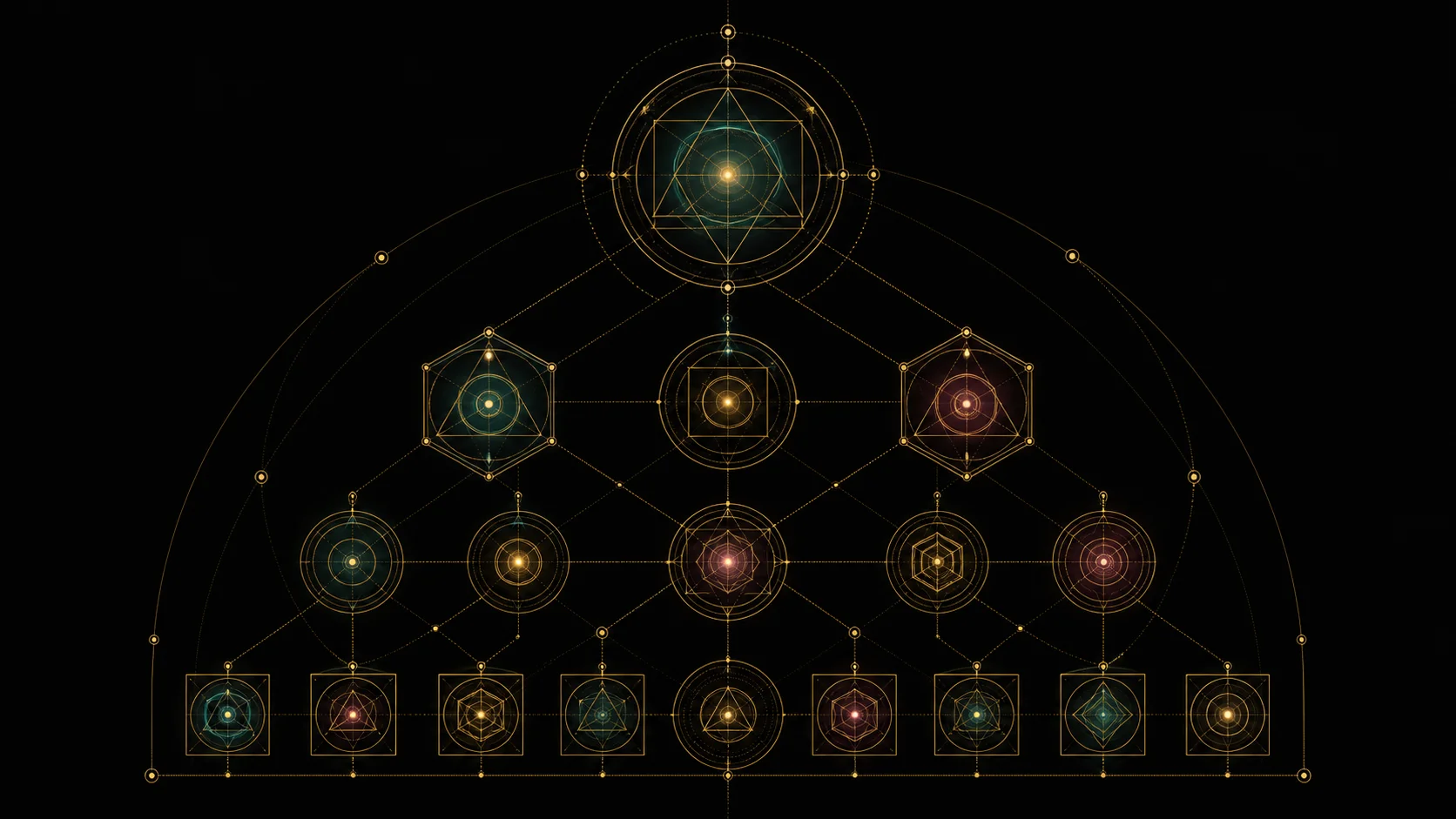
An attractor state is a stable pattern that a system returns to when perturbed. Think of a ball in a valley. You can push the ball up the hill with effort, but when you stop pushing, it rolls back to the bottom of the valley. The valley is the attractor. The ball returns to it because the shape of the landscape makes that the path of least resistance.
Your behavioral patterns work the same way. The reason you keep opening Instagram despite having decided not to is not that you lack discipline. It is that your environment, your dopamine system, your social context, and your tooling have collectively shaped a valley that the behavior rolls into. Effort can push you out of the valley temporarily, but it cannot hold you there. The landscape pulls you back.
Why Effort Fails
Effort is a force applied against a landscape. It works in the short term. It fails in the long term because:
Effort is finite. You can exert willpower for a limited time before depletion. The landscape is infinite. It never depletes. It wins by attrition.
Effort does not change the landscape. Pushing the ball up the hill does not flatten the hill. When you stop pushing, the hill is still there.
Effort requires constant vigilance. You must remember to exert it. The landscape does not require vigilance. It operates whether you are thinking about it or not.
Effort is the wrong tool for the wrong layer. Effort operates in the UR quadrant (individual behavior). The landscape is shaped by the LR (systems), LL (culture), and UL (interior) quadrants. Applying UR effort to an LR problem is like pushing a ball uphill while the hill grows.
What Conditions Do
Conditions are the shape of the landscape. Redesigning conditions means reshaping the valleys so that the desired behavior is the path of least resistance.
This is not "make it easy." Easy is a surface-level read. The deeper claim is: the behavior you want should be the behavior the landscape naturally produces. If you have to fight the landscape to produce it, you will lose. Not because you are weak, but because the landscape is stronger than you.
The Redesign Protocol
Map the current attractor. What behavior does the landscape naturally produce? Not what you wish it produced. What it actually produces when you stop exerting effort.
Identify the conditions sustaining it. What are the LR (systems), LL (culture), UL (interior), and UR (behavioral) conditions that make this the path of least resistance?
Redesign the conditions, not the behavior. Do not set a goal to "do X more." Set a goal to change the conditions so that X is what the system does when you are not trying.
Accept that some conditions are not yours to change. If the attractor is sustained by economic precarity, cultural norms, or institutional structures, no amount of personal-systems design will fully resolve it. The structural diagnosis is still useful: it tells you which conditions are movable and which are not.
The Neurodivergent Case
For neurodivergent brains (ADHD, autistic cognition), the attractor landscape is shaped differently. The dopamine system does not reward the same things. The executive function does not gate behavior the same way. The sensory environment has different weights.
This is why neurotypical productivity advice fails for ND brains. It assumes a landscape that ND brains do not inhabit. "Just use a planner" assumes the planner is a valley the brain will roll into. For an ND brain, the planner is a hill. The brain rolls away from it.
The redesign question for ND brains is not "how do I force my brain to use neurotypical tools" but "what tools match the shape of my brain's attractor landscape." This is a conditions question, not an effort question.
What This Changes
For individuals: the question shifts from "what habit should I build" to "what conditions would make this behavior the path of least resistance." The first question leads to effort. The second leads to design.
For practitioners: the question shifts from "how do I motivate the client" to "what conditions in the client's life are sustaining the unwanted pattern, and which of those are movable." The first question leads to coaching. The second leads to structural diagnosis.
For the field: the question shifts from "why don't people stick with it" to "what about the landscape makes sticking with it the harder path." The first question blames the individual. The second examines the system.
The Refusal
This framing refuses two things:
It refuses the moral frame. "You just need to try harder" is a moral judgment, not a structural diagnosis. It locates the problem in the individual's will and the solution in their effort. The attractor-state frame locates the problem in the landscape and the solution in the design.
It refuses the manifesting frame. "Just visualize the outcome and it will happen" is also a non-structural frame. It operates in the UL quadrant (interior) and ignores the LR, LL, and UR conditions. Visualization can change the interior landscape, but it cannot reshape the structural conditions that sustain the pattern.
Both frames are single-quadrant interventions applied to a four-quadrant problem. Both will produce partial results, then plateau, then cynicism.
The attractor-state model is not a productivity hack. It is a diagnostic instrument that tells you which layer to intervene on, and why effort alone will not get you there.
For a diagnostic instrument that maps your own attractor landscape across the four quadrants, take the LifeOS Audit assessment.
Enjoying this?
Get weekly insights on consciousness, systems, and sovereignty.
Share
Comments
Sign in to join the conversation.